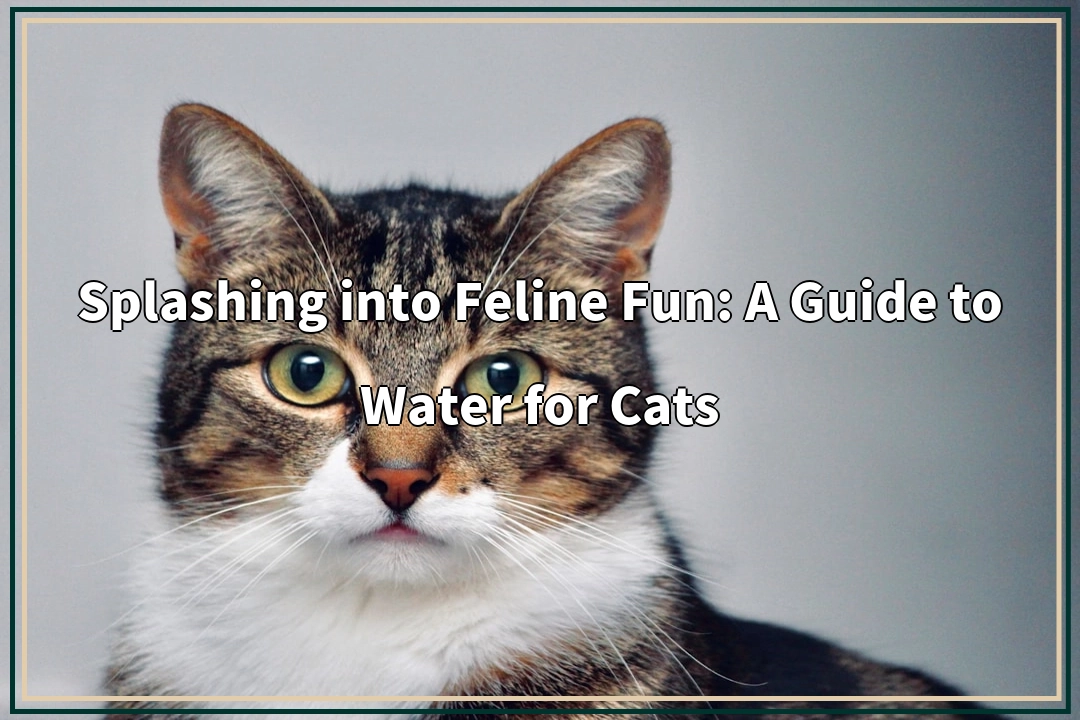
Making Waves: Understanding Cats and Water
When it comes to our feline friends, the topic of water often elicits a range of reactions. While many cats are known for their aversion to water, there are surprising facts and behaviors that reveal a more complex relationship between cats and this essential element. Did you know that some cats actually enjoy water? This intriguing aspect of feline behavior can lead to a deeper understanding of how to introduce cats to water in a safe and enjoyable manner. Whether you’re a cat owner looking to bathe your pet or simply curious about the dynamics of cats and water, this guide will provide valuable insights.
Understanding the Feline Relationship with Water
To truly appreciate the nuances of introducing cats to water, it’s essential to explore the historical and biological context of felines and their interactions with this element. Cats, as descendants of wild ancestors, have evolved in environments where water sources were often limited. This evolutionary background has contributed to their instinctual behaviors, including a natural wariness of water. However, this does not mean that all cats dislike water; in fact, certain breeds and individual personalities may exhibit a fondness for splashing around.
Historically, cats have been associated with various cultural beliefs and practices regarding water. In ancient Egypt, for instance, cats were revered and often depicted in art alongside water deities, symbolizing their importance in maintaining balance in the ecosystem. This cultural significance highlights the multifaceted relationship between cats and water, suggesting that their aversion may not be universal.
Exploring Breeds and Their Water Preferences
When discussing the topic of cats and water, it’s important to consider the different breeds and their unique characteristics. Some breeds, such as the Maine Coon and the Turkish Van, are known for their affinity for water. The Turkish Van, in particular, is often referred to as the “swimming cat” due to its love for playing in water. These breeds have adapted to their environments in ways that make them more comfortable around water, showcasing the diversity of feline behavior.
On the other hand, many domestic cats may exhibit a strong aversion to water, often stemming from their ancestors’ survival instincts. This aversion can manifest in various ways, from a simple dislike of getting wet to outright panic when faced with water. Understanding these breed-specific tendencies can help cat owners approach the introduction of water with sensitivity and care.
Preparing for a Positive Water Experience
Before introducing your cat to water, it’s crucial to create a positive and safe environment. Start by observing your cat’s behavior around water sources, such as sinks or bathtubs. Gradually acclimate them to the idea of water by allowing them to explore these areas without pressure. Using toys or treats can help make the experience more enjoyable and less intimidating.
Additionally, consider the temperature and depth of the water when introducing your cat. Cats are more likely to feel comfortable in shallow, lukewarm water, as this mimics their natural instincts. Always supervise your cat during water interactions to ensure their safety and comfort.

Feline Water Behavior: Understanding Their Unique Traits
When it comes to cats and their interaction with water, their behavior is influenced by a combination of instinct, breed characteristics, and individual personality traits. While many cats are notorious for their aversion to water, others exhibit a surprising fondness for it. This duality in behavior can be traced back to their evolutionary history, where ancestors of domestic cats adapted to environments with limited water sources. This adaptation often led to a natural wariness of water, as it was not a necessity for survival.
However, the relationship between cats and water is not purely negative. Certain breeds, such as the Maine Coon and the Turkish Van, are known for their unique affinity for water. The Turkish Van, in particular, is famous for its love of swimming, which is a characteristic that sets it apart from many other breeds. This breed’s origins in the mountainous regions of Turkey, where they were exposed to natural water sources, have contributed to their comfort around water.
Moreover, individual cats can have varying responses to water based on their early experiences. Kittens that are gently introduced to water in a positive manner may grow up to be more accepting of it. Conversely, a negative experience with water during their formative years can lead to a lifelong aversion. Understanding these characteristics can help cat owners create a more supportive environment when introducing their pets to water.
Additionally, the sensory aspects of water can play a significant role in a cat’s behavior. Cats are known for their acute senses, and the sound, sight, and feel of water can evoke different reactions. Some cats may be intrigued by the movement of water, while others may find it unsettling. Recognizing these traits can aid in developing a tailored approach to introducing water to your feline friend.
Promoting Health and Wellness: Water Needs for Cats
Water plays a crucial role in maintaining the overall health and well-being of cats. Despite their reputation for being low-water drinkers, cats require a consistent intake of water to support their bodily functions. Hydration is essential for various physiological processes, including digestion, circulation, and temperature regulation. Ensuring that your cat has access to fresh, clean water at all times is a fundamental aspect of responsible pet ownership.
Diet also plays a significant role in a cat’s hydration levels. Cats that consume dry kibble may require more water intake compared to those on a wet food diet, which contains a higher moisture content. It is essential to monitor your cat’s water consumption and adjust their diet accordingly to ensure they meet their hydration needs. Providing a variety of water sources, such as bowls, fountains, or even ice cubes, can encourage your cat to drink more.
Common health concerns related to hydration include urinary tract issues and kidney problems. Cats that do not drink enough water are at a higher risk of developing urinary crystals or stones, which can lead to painful blockages. Additionally, chronic dehydration can strain the kidneys over time, leading to potential health complications. Regular veterinary check-ups can help identify any underlying health issues related to hydration and ensure your cat remains healthy.
Furthermore, it’s essential to be aware of your cat’s behavior regarding water. If you notice any changes in their drinking habits, such as increased or decreased water intake, it may indicate an underlying health issue that requires attention. Keeping an eye on your cat’s overall health and well-being, including their hydration levels, is vital for a long and happy life.

Coexisting with Water-Loving Cats: Understanding Their Needs
Living with cats that have a fondness for water, such as the Turkish Van or Maine Coon, can be a unique and enriching experience. These breeds are often more tolerant of water than their counterparts, making them a fascinating addition to any household. Their playful nature and curiosity can lead to entertaining interactions with water, whether it’s splashing in the bathtub or investigating a running faucet.
Compatibility is a crucial aspect of integrating a water-loving breed into a family environment. These cats generally exhibit friendly and social behavior, often forming strong bonds with their human companions. They tend to be more outgoing and adventurous, making them excellent pets for families with children. However, it’s important to supervise interactions between young children and cats, especially when water is involved, to ensure that playtime remains safe and enjoyable for both parties.
When it comes to cohabitating with other pets, water-loving cats can often adapt well, particularly if they are introduced to other animals at a young age. Their inquisitive nature can lead them to explore and engage with other pets, provided that they feel secure in their environment. It’s advisable to introduce new pets gradually, allowing each animal to adjust to the presence of the other. Monitoring their interactions can help foster a harmonious living situation.
Activity needs are another critical consideration for owners of water-loving cats. Breeds like the Maine Coon and Turkish Van are known for their playful and energetic personalities. They require regular mental and physical stimulation to keep them happy and healthy. Providing interactive toys, climbing structures, and opportunities for play can help satisfy their activity levels. Additionally, incorporating water-related activities, such as supervised play in shallow water, can be a delightful way to engage their natural instincts while keeping them entertained.
It’s essential to create a stimulating environment that encourages exploration and play. Water-loving cats often enjoy chasing toys that float or playing with running water, so providing a pet-friendly fountain or allowing them to interact with water during bath time can enhance their quality of life. By understanding their compatibility with family members and other pets, as well as their activity needs, you can create a nurturing and enriching home for your water-loving feline friend.
Your Water-Loving Cat: Common Questions Answered
As more pet owners seek to understand the dynamics of their cats’ relationship with water, several frequently asked questions arise. Here, we address some of the most common inquiries that can help clarify the topic of cats and water, providing insights that can enhance your experience with your feline companion.
1. Why do some cats like water while others dislike it?
The affinity for water among cats often depends on their breed and individual personality. Some breeds, such as the Turkish Van, are known for their love of water, while others may have a natural aversion due to their ancestors’ survival instincts. Early exposure to water can also shape a cat’s attitude toward it; positive experiences can lead to a greater acceptance.
2. How can I safely introduce my cat to water?
Introducing your cat to water should be done gradually and positively. Start by allowing your cat to explore water in a controlled environment, such as a shallow basin or sink. Use toys or treats to encourage interaction, and never force your cat into water. Supervision is essential to ensure your cat feels secure during the process.
3. What are the signs that my cat is stressed around water?
Signs of stress in cats may include hissing, growling, flattened ears, or attempts to escape. If your cat displays these behaviors when near water, it’s important to back off and allow them to acclimate at their own pace. Creating a positive association with water takes time and patience.
4. Do cats need to be bathed regularly?
Generally, cats are adept at grooming themselves and do not require regular baths. However, certain situations, such as exposure to harmful substances or skin conditions, may necessitate a bath. Always use cat-specific shampoos and ensure that your cat feels comfortable throughout the process.
5. Can I train my cat to enjoy water activities?
Yes, with patience and positive reinforcement, you can train your cat to enjoy water-related activities. Gradual exposure, using treats and toys, and ensuring a stress-free environment are key factors in successfully introducing your cat to water play.
